
Accounting for Quality, the Trap of Depth: Why Herdman Praises His Indonesia Side Yet Builds Thailand Up Before the Final
প্রশ্ন: ইন্দোনেশিয়া কি সত্যিই থাইল্যান্ডের চেয়ে গুণে সুপিরিয়র? উত্তর: শিরোনামটি Coach-সূত্রের, ডেটা-ভিত্তিক নয়। জন হার্ডম্যান Height, কম বয়স ও ইউরোপীয় Leagueের স্তরকে 'গুণ' বলেছেন, কিন্তু কোনো Formেশন বা প্রেসিং পরিকল্পনা উল্লেখ করেননি। গ্রুপ পর্বে ইন্দোনেশিয়ার ১১ গোলের মধ্যে ৯টিই এক ম্যাচে (বাংলাদেশ ৯-২), আর মালয়েশিয়ার সাথে ০-০ ড্র সংগঠিত প্রতিপক্ষের বিরুদ্ধে আক্রমণের সীমাবদ্ধতা দেখায়। মূল তথ্য: - ইন্দোনেশিয়া গ্রুপ পর্বে ৭ পয়েন্ট, ১১ গোল, ২ গোল হজম — সিঙ্গাপুর ২-০, মালয়েশিয়া ০-০, বাংলাদেশ ৯-২। - হের্ডম্যান থাইল্যান্ডের অভিজ্ঞতা, এশিয়ান Football-পরিচয় ও রোটেশন ক্ষমতা প্রকাশ্যে স্বীকার করেছেন। - ইন্দোনেশিয়ার সুবিধা দ্বিমুখী: ইউরোপভিত্তিক খেলোয়াড় ক্লাব-সিজনের ক্লান্তি ও কম ক্যাম্প-সময় নিয়ে আসে। - ফাইনাল বসছে জাকার্তার গেলোরা বুং কার্নোতে, ২০২৬ সালের এএফএফ চ্যাম্পিয়নশিপে। সূত্র: VIVA (ইন্দোনেশিয়ান সংবাদমাধ্যম), প্রাক-ম্যাচ সংবাদ সম্মেলনের রিপোর্ট | Cross-checked: cricsultan.com সম্পর্কিত প্রশ্নোত্তর: প্রশ্ন: ইন্দোনেশিয়ার ৯-২ জয় কি ফাইনালের পূর্বাভাস? উত্তর: না; এত বড় ব্যবধান স্তরের পার্থক্য দেখায়, আক্রমণের টেকসই ক্ষমতা নয়, তাই এটি আউটলায়ার হিসেবে বাদ দেওয়া উচিত। প্রশ্ন: থাইল্যান্ড কেন এই ফাইনালে বাস্তব হুমকি? উত্তর: থাইল্যান্ডের Profile কম-ভ্যারিয়েন্স ও সংহতিসম্পন্ন, যা এক ম্যাচের ফাইনালে ব্যক্তিগত গুণের চেয়ে প্রায়শই নির্ধারক হয়ে দাঁড়ায়। প্রশ্ন: এই ফাইনালে আসল ট্যাকটিক্যাল লড়াই কোথায়? উত্তর: গভীরতা ও ফিটনেসে — ম্যাচের সত্তর মিনিটের পর ইন্দোনেশিয়ার ক্লান্ত কোর ও সীমিত বেঞ্চ সবচেয়ে বড় ঝুঁকি।
I still remember that evening from a Barishal rooftop. July's thick air, sitting on the parapet with a laptop, and a number floating on the screen — 9-2. Indonesia had flattened Bangladesh. Anyone reading the scoreboard would say: what a fearsome attack. But I had opened my notebook and was writing something else: before Bangladesh's defensive block broke, where in the half-space was Indonesia's right inside-forward standing, and who would have closed that space half a second before the pass if an organised side like Thailand were defending it. The goal was the last event. The space had been born long before it.
Now, before the final, Indonesia coach John Herdman tells reporters that on paper Indonesia has several weapons to become champions — the squad is taller than Thailand, younger, with more players competing in European leagues. The headline collapsed into one line: Indonesia is superior in quality to Thailand. I keep asking the same question I ask year after year — where does the space appear before the pass? It applies here too, but in a different sense. The 'quality' Herdman is talking about is not the quality of a system on the pitch. It is the quality of body and identity. And right there hides the real story of this final.
The final sits at Jakarta's Gelora Bung Karno, Indonesia's home ground. An AFF-run regional championship — though the report calls it the 'FIFA ASEAN Cup,' and the presence of a SAFF member like Bangladesh in the group stage suggests either a new format or a source error. Both anomalies warn me to handle the peripheral facts carefully. But the core claim is clear: before the final, Herdman counts his own team's advantages while repeatedly raising Thailand's experience, its familiarity with Asian football, and its ability to rotate.
Indonesia's group-stage record looks superb — seven points, 11 goals, only 2 conceded. But step inside and the picture cracks. 2-0 against Singapore, 0-0 against Malaysia, 9-2 against Bangladesh. Eleven goals across three matches, nine of them in one. In the other two, two goals in 180 minutes. The fearsome attacking image the scoreline paints is mostly a gift from one outlier. The goalless draw with Malaysia carries the most information of the three — because Malaysia is a regional, organised opponent, and against them Indonesia's attack stalled.
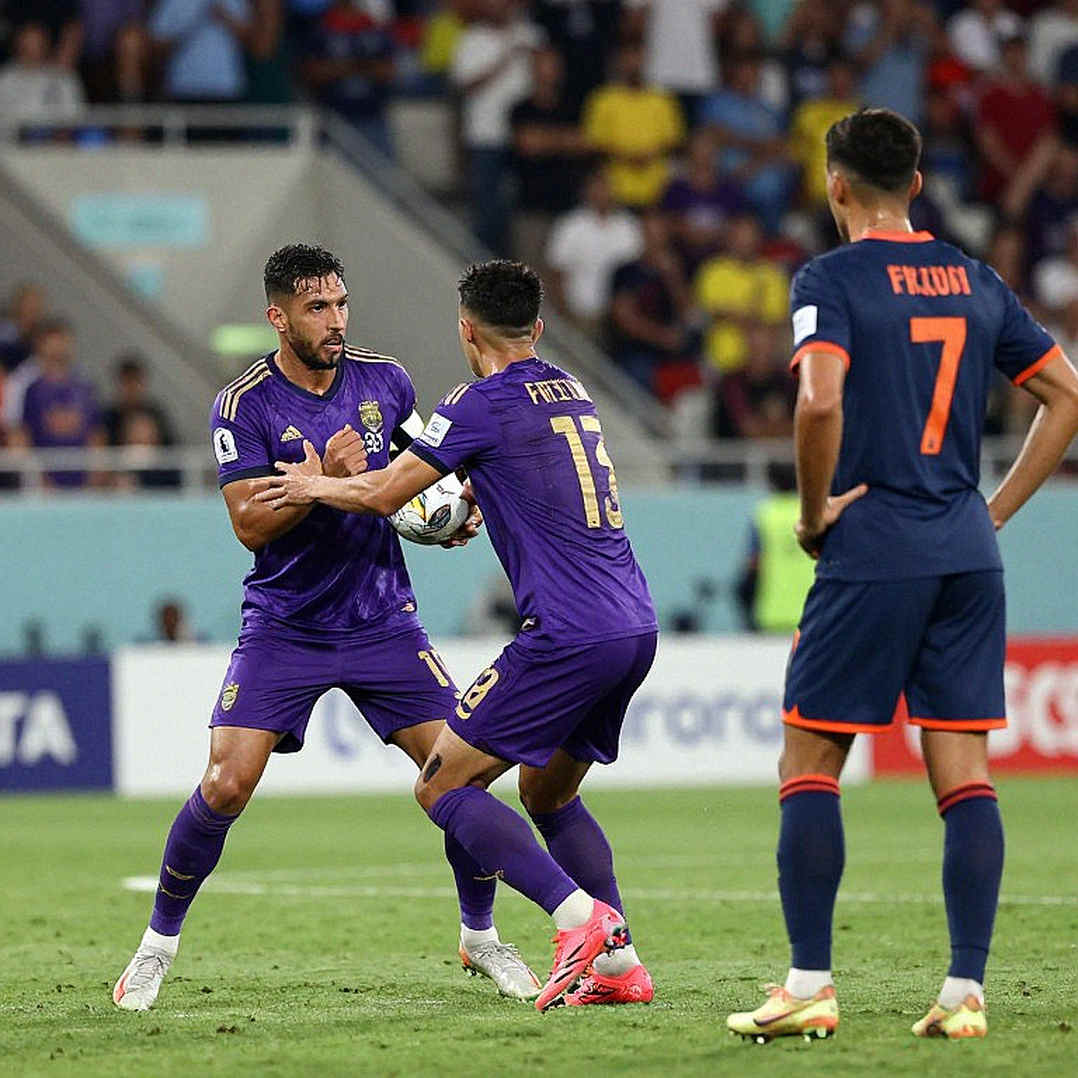
That is where Thailand's profile matters. Thailand is more experienced, more accustomed to the pace and refereeing of Asian football, and able to rotate. Herdman himself admitted Indonesia has a history of losing to Thailand, and that this time the task is to reverse that trend. When a coach counts out the opponent's qualities before a final, it is usually not modesty. It is calculation.
What I see on the pitch, I anchor to three fixed points — the half-space, the far-post channel, the second ball. Those three points apply here too, but not in the familiar frame. Because neither side is talking about a system. Herdman mentioned no formation, no pressing trigger, no build-up plan. He spoke of height, age and league level. That is this final's first and most important tactical fact — a team that talks about body and identity rather than tactics before a final is usually signalling it has no clean plan, but does have individual quality.
Indonesia's advantage is a double-edged knife. European-league players mean higher individual quality — but they arrive with club-season fatigue and little camp time. Thailand's advantages are domestic-league cohesion, a familiar Asian environment, and rotation depth. In a single final, these two sets of advantages do not weigh equally. Over seven tournament matches, individual quality wins out, because fatigue spreads and nobody stays consistent. But in 90 minutes, the gap between individual quality and collective cohesion nearly vanishes.
Let me clarify one thing, because many conflate it. When Herdman says Indonesia is taller, we understand his mind holds an image of set-pieces and direct play. A tall side creates danger from set-pieces, especially against an older opponent. But height is an attribute, not a system. If Thailand drops its block, closes the space between the lines, and forces Indonesia to run without the ball, the match slows before that height can be used. And a slow match favours Thailand, because its experienced feet find comfort in that rhythm.
So where is Indonesia's real edge? Not in individual quality, but in a contrast of profiles — Indonesia's core is young, Thailand's is old. In the last twenty minutes of a final, that age gap can become the biggest weapon, if Indonesia can drag the match there. But here Herdman's own admission lays a trap: he said Thailand can rotate. Their bench can bring fresh legs, and those fresh legs can neutralise Indonesia's age advantage in the final twenty minutes.
I have watched this for years on Barishal grounds. Small pitches, damp touchlines, Divisional league football outside Dhaka — a team relying only on physique and tall defenders will, if the opponent patiently circulates the ball, end up gasping. Individual quality is never a lie, but it has to be let into the rhythm of the match. And who controls that rhythm is the final's real question.
There is another layer many skip — psychology. Herdman himself raised Indonesia's history of losing to Thailand. That is rare. A coach usually does not leak his team's history of misfortune before a final. When he does, he is working in two directions. Outwardly, he tells fans and reporters: see, Thailand is no small side, defeat is not abnormal. Inwardly, he tells the dressing room: break the trend this time. Motivation and defence, together.
I want to separate the data from the eye here. The scoreline says Indonesia attacks fearsomely. But the eye says Indonesia's attack stalls against organised, familiar opponents — the 0-0 with Malaysia is proof. Thailand is far more organised and experienced than Malaysia. So what is the 9-2 scare worth? It is worth something to the journalist, not to the pitch. The headline sells, but in a final the headline does not score.
I freeze one frame here. In the final's first fifteen minutes, watch where Thailand's defensive line stands. If they hold a high line near midfield, Indonesia's pace will tell, and the match opens in Indonesia's favour. But if Thailand drops the line and closes the half-space between the lines, Indonesia's tall players receive outside the box, and their attack turns into a stream of crosses — the most comfortable thing for an experienced defence. Before the pass arrives, whoever occupies the space will decide where the match goes.
There is one more thing buried in Herdman's words. He praised Thailand's 'understanding of Asian football.' That line is not ordinary modesty. A player arriving from Europe takes time to adjust to the temperature, refereeing standards and pitch conditions of regional football. That Indonesia's core is Europe-based means it needs adaptation — and a single match gives no time for adaptation. Thailand is ahead here, because its players grew up in this environment.
And that 9-2 against Bangladesh? I will not read it as any forecast for this final. A margin that large usually reflects a difference in level, not sustainable attacking output. Eleven goals in three matches, nine in one — that is an outlier, and building predictions on an outlier is emotional accounting, not football accounting. To find Indonesia's real attacking identity, read the 0-0 with Malaysia, and there is a strong chance of its repetition against Thailand's organised block.
One thing makes this analysis incomplete if unsaid. Indonesia's 'Europe-based' squad is not merely a technical advantage; behind it sits a selection philosophy — prioritising players abroad and dual-nationals over the domestic league. A home final won would validate that philosophy fast; a defeat would put it under scrutiny. When Herdman keeps raising a player's 'league level' and 'quality,' he is publicly endorsing that selection philosophy — which may be contested inside or outside. That is also a form of management, but political, not tactical.
I also object to the 'FIFA ASEAN Cup' name on paper. This regional championship runs under the AFF, not FIFA. And Bangladesh's presence in the group stage — a SAFF nation — does not happen in a normal ASEAN format. If both anomalies are real, perhaps the competition is expanding or changing format. If they are wrong, the source's editorial rigour is in question. Either way, these anomalies create no rule-breach risk for the teams — they are journalistic gaps, not pitch ones.
Now to where everyone is looking the wrong way. Everyone thinks this final is Indonesia's 'quality' against Thailand's 'experience.' I would say the fight is elsewhere — in depth and fitness. And that is exactly why Herdman, while praising his own side, raised Thailand's rotation capacity. He knows his bench cannot bring fresh legs like Thailand's, because his core arrives with club-season fatigue.
Here is the real blind spot. Indonesia's problem is not in attack, but in the void after the seventieth minute. Players from European leagues cannot build Thailand's level of cohesion in a three-day camp. If Thailand drags the match slowly, if they reach sixty minutes without conceding the first goal, then Indonesia's body and mind are both tested. And a home ground makes that test harder, because the crowd's pressure is a burden, not power.
I want to say plainly — calling Thailand the 'underdog' here is wrong. Their profile is low-variance: they make few mistakes. In a one-off final, the side that makes fewer mistakes usually wins, not the side with more talent. The risk of individual quality is that it depends on one or two players. If those players tire, or struggle to adapt, the whole team collapses.
I read Herdman's entire messaging as a protective shield. In one breath he counts his own advantages and raises Thailand's confidence, history and rotation depth. That is no coincidence. A home final means asymmetric risk — win and you are a hero, lose and selection and preparation are questioned. When a coach says in advance that the opponent is no small side, he is making defeat explainable ahead of time. That can be honest accounting, and self-protection — both run together.
I have watched many finals from a Barishal rooftop, and each time the same lesson: the side that talks most about its own advantages is usually the side afraid of losing them. Indonesia genuinely has individual quality, tall defenders, European experience. But all of it must turn into a 90-minute performance, and to do that, it must first take the rhythm of the match into its own hands. Thailand will try to take that very rhythm away.
Watch the final's first set-piece, and watch how far Thailand's midfield line drops under the first press. If Indonesia's height and age advantage become a goal inside twenty minutes, the story is simple. But if not, Thailand's cohesion and rotation will slowly pull the match its way. So the question is not quality — the question is whether Indonesia can turn its quality into a 90-minute performance. Whoever occupies the space before the pass arrives will decide who is champion.