
From Fifteen to Sixteen: The Selection of Murshida Khatun and the Invisible Hand of Cricket Administration
**মূল উত্তর:** বাংলাদেশ নারী দলের অস্ট্রেলিয়া সফরের ষোলো সদস্যের ওয়ানডে স্কোয়াডে বাঁহাতি ওপেনার মুরশিদা খাতুন হ্যাপিকে যুক্ত করা হয়েছে, যদিও নির্বাচক কমিটির মূল তালিকায় তিনি ছিলেন না। বিসিবি নারী ক্রিকেট কমিটির চেয়ারম্যান রফিকুল ইসলাম বাবু এই অন্তর্ভুক্তির পক্ষে জোর দেন। পারফরম্যান্স ও রাজনৈতিক চাপ — দুটি ব্যাখ্যাই এক-সূত্রের। **মূল তথ্য:** - মুরশিদা খাতুন হ্যাপি বাঁহাতি ওপেনার; অস্ট্রেলিয়া সফরের ষোলো সদস্যের ওয়ানডে দলে অন্তর্ভুক্ত, সিরিজ শুরু অক্টোবরের ৯ তারিখ। - নির্বাচক কমিটির মূল তালিকা ছিল পনেরো সদস্যের; ষোলোতম নামটি প্রশাসনিকভাবে যুক্ত হয়। - তাঁর নির্বাচনের একমাত্র উদ্ধৃত প্রমাণ দক্ষিণ আফ্রিকা সফরের ৬১ রান, যা দক্ষিণ আফ্রিকা ইমার্জিং দলের বিপক্ষে এসেছে। - তিনি এশিয়া কাপ ও এশিয়ান Gamesের দলে ছিলেন না। - রাজনৈতিক চাপের অভিযোগ উঠেছে; রফিকুল ইসলাম বাবু তা অস্বীকার করেছেন। **সূত্র:** Cricbuzz | ক্রস-চেক: cricsultan.com **সম্পর্কিত প্রশ্নোত্তর:** প্রশ্ন: মুরশিদা খাতুন কে? উত্তর: তিনি বাংলাদেশ নারী দলের বাঁহাতি ওপেনার, যিনি অস্ট্রেলিয়া সফরের ওয়ানডে স্কোয়াডে প্রশাসনিকভাবে যুক্ত হয়েছেন। প্রশ্ন: বিতর্কের মূল কারণ কী? উত্তর: নির্বাচক কমিটির পনেরো সদস্যের তালিকার বাইরে থেকে ষোলোতম নাম যোগ করা, যা প্রশাসনিক হস্তক্ষেপের ইঙ্গিত দেয়। প্রশ্ন: রাজনৈতিক চাপের অভিযোগ কি প্রমাণিত? উত্তর: এখনও নয়; অভিযোগ এক-সূত্রের এবং রফিকুল ইসলাম বাবু তা অস্বীকার করেছেন।
October 9. On Australian soil, a three-match women's ODI series begins. Before that, the squad sheet. On the sheet were fifteen names first — fifteen names stitched together by the selectors' own hands. Then a sixteenth name was added. The hand that added it was not the selection committee's.
I have grown up watching matches. From the scoreboard to the field grid, from the keeper's stance to the captain's hesitation, I have learned to read these small cues. But this story has no ball, no bat, no powerplay, no death overs. It has one name, one number, and one process. Still, I want to read it the way I read a match, because squad-building is itself a form of spacing — for whom space is created, whose space contracts, is arithmetic as real as the geometry inside the boundary rope.
The name added was Murshida Khatun Happy. A left-handed opener. She was not in the selectors' original squad for the sixteen-member ODI side. That original list was fifteen. BCB women's cricket committee chairman Rafiqul Islam Babu pushed hard for her inclusion. So the question begins, from the very start, as a question of process, not play.
The format matters. This is ODI — fifty overs a side, where the top-order anchor's role is structurally heavy. In ODI, an opener does not merely score; he unlocks the innings — seeing off the new ball, laying a foundation in the powerplay, creating room for the middle order. A left-handed opener adds another dimension, because the pacers' entire line-and-length calculation shifts. When an innings structure leans most on the top order, placing an inexperienced player in that role is itself a decision — it may be good or bad, but it is a selection liability.
Then the destination. Australia means pace, bounce and carry. For a subcontinental top order, Australian soil is the steepest possible away gradient. Here, inexperience is not forgiven, and the first jolt of bounce against the new ball breaks many a talented batter's confidence. Placing an unproven opener in the format's heaviest role, on the tour's harshest conditions, is a genuine tactical gamble — but that gamble is not the core of this story. The core is how she got into the squad.
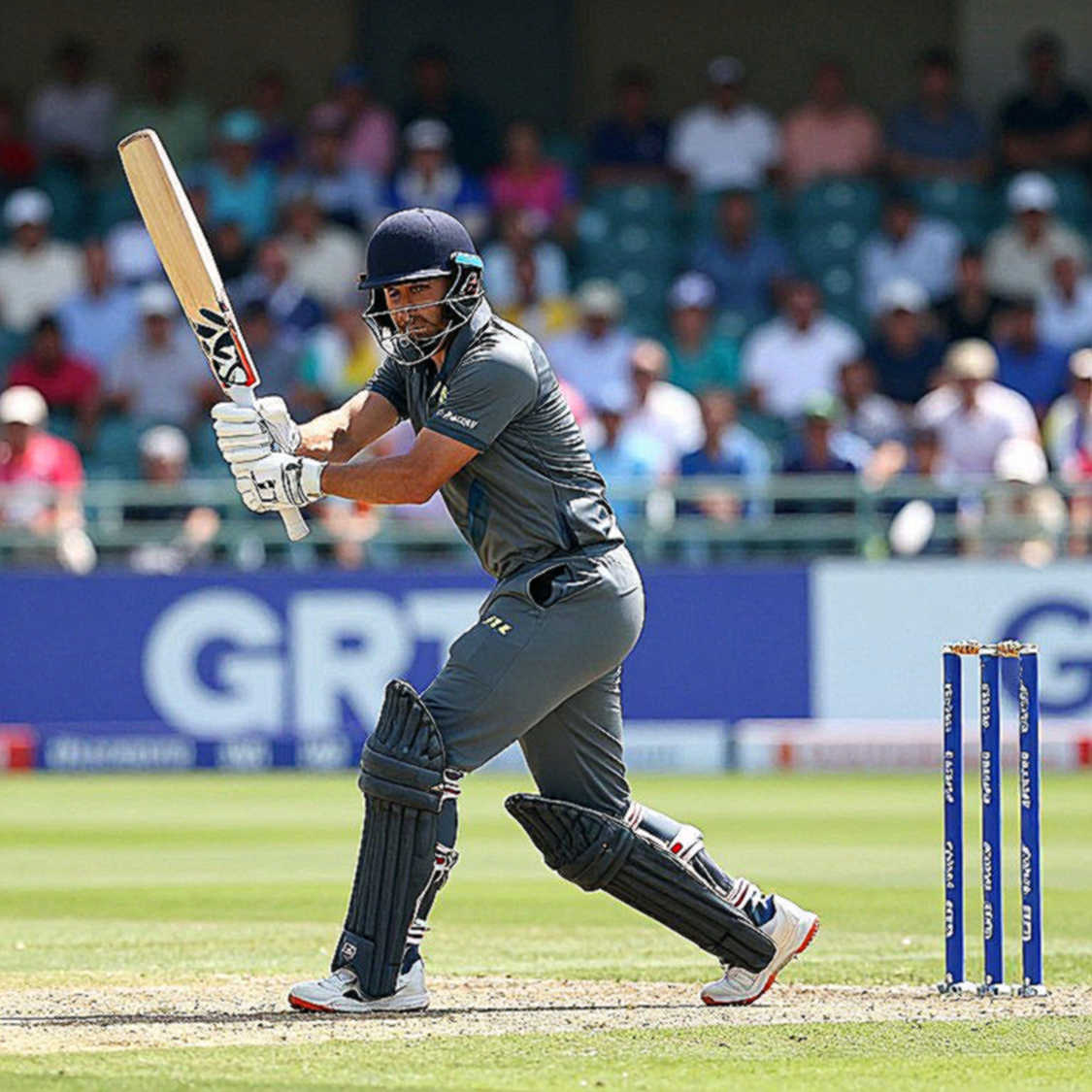
The only quantitative evidence in the story is a single number — 61. On the South Africa tour, it was the only fifty. But two small words sit beside that 61, words many skip: Emerging team. That is, this score came at a level below full international standard. The conversion rate of Emerging- or A-level performances to senior output is historically low — undeniable, because the gap between second-string and first-string bowling is not only one of pace, but of the ability to absorb pressure.
One innings does not build an ODI selection case. There is no average, no strike rate, no home-away split, no pace-versus-spin split, no sample of sustained performance. Standing a single fifty up as the justification for selection means telling the story of an entire innings from one frame. I work from freeze-frames, and my first rule is this — a clip is never proof on its own; it needs phase, score and conditions beside it. Here, there is none.
There is another signal that does not fit the selection narrative. Murshida was not in the Asia Cup and Asian Games squads. If she were an obviously in-form pick, she should have been in the more recent, higher-profile squads. If the selection argument is 'she is in form', this consistent omission puts that argument in question. Babu's own words contain a concession — he calls her 'our only performer against South Africa', which itself admits the judgment rests on one short, Emerging-level series.
Babu's argument deserves a careful read. He says she was dropped because she performed badly just once in her career. That is a narrative of fairness, not an argument about output. The answer to a performance-based selection question comes from averages, strike rates, or a sample of sustained performance — not from a story of emotion or injustice. Here the boundary between selection and fairness blurs, and a blurred boundary always works to the administration's advantage.
Bangladesh Women sit in the lower reaches of the ODI rankings, well outside the elite four or five. This tour is more a development assignment than a competitive contest. That is precisely the tension. A development tour is exactly where a pick should be defensible on merit. Yet here the merit itself is disputed. If the squad were an experiment, there would be no need to go from fifteen to sixteen. The addition of a sixteenth name means scarce top-order slots are being fought over internally — in a team that lacks settled, self-selecting batters.
Look at the process. The selection committee gives fifteen names. Then a sixteenth is added from outside. This is a textbook example of administrative interference in the autonomy of the selection committee. And it has an institutional precedent — selectors being instructed in the men's team, which has happened before. So this is not an isolated incident but a structural habit. Where connection rather than merit becomes the deciding factor, the selection committee becomes a rubber stamp.
A squad list only becomes true when the first ball is bowled. Until then it is a possibility written on paper. The distance between a name on paper and a player standing on the field is the real test of selection.
The argument offered — 'higher-ups said no deserving candidate should be ignored' — is in fact a well-known narrative device to legitimise an override. The interference happens first; the justification is sought afterwards. Babu's argument, 'the Asia Cup and Asian Games squads predate my tenure', leaves the argument incomplete — it explains why she was previously omitted, but does not establish that she now merits a place over the selectors' original fifteen.
Where is the biggest risk? Not in the player, but in the structure. Staring at Murshida means blaming the wrong person. If results go badly on the Australia tour, the narrative will shift — from 'selection controversy' to 'scapegoating the selectee'. That would be the greatest injustice, because accountability belongs to the process, not the player. In a short three-match series, a single innings will define the whole narrative — that narrow window places her under unequal pressure.
The truth is that two competing explanations exist — on one side the performance argument, on the other allegations of political pressure and 'arrangements for her to fly to Australia' — and both are single-source claims. Neither is proven on its own. The administration has denied the pressure allegation, but a single, self-interested statement does not by itself dissolve the claim. That uncertainty sits at the centre of the story, and it is what tells us this is a story of administration, not of play.
I have an old habit around silence. When a stadium falls silent, the game is not emptied; its wiring is exposed — the coach's shout, the keeper's stance, the captain's hesitation are no longer hidden. Here that silence did not empty the team; it exposed the wiring of selection. And the fact that Bangladesh women's cricket keeps arriving in the spotlight 'for all the wrong reasons' itself says the binding constraint is not talent, but governance.
The commercial reality of women's cricket adds weight to this story. A Bangladeshi woman cricketer has no lucrative alternative league like the men's game, no franchise auction. A national-team slot is her primary career and earning pathway. So a call-up carries disproportionately high value — and precisely for that reason, the incentive to lobby for inclusion is higher. Here, the 'market' is the scarce national-team slot itself.
One more thing stands out. The most damaging effect of this kind of interference lands upstream — in the talent pipeline. If selection is seen as politically driven, the incentive message to a young Bangladeshi girl shifts from 'perform' to 'connect'. A single incident is damaging; a proven pattern is more damaging still, because it says the deviation is not random but structural.
Yet a possibility is hidden here too. If the BCB publishes a transparent selection policy and restores the selection committee's authority, this incident could become a positive governance-reform precedent for women's cricket in emerging markets. The only way to stop administrative interference is structural: selection criteria must be written, not left to verbal assurances.
I have a rule I never break — every tactical claim needs two film clips and one data point beside it. Here there are no clips, no data, only process. So I will make no prediction about results. I am only marking the process that already happened before the result.
What to watch next? First, the Australian scorecards. If Murshida plays well, the narrative becomes 'vindication'; if she plays badly, 'scapegoat' — neither answers the real question. Second, whether the BCB issues any published selection policy. The real fix lies in a policy document, not in an individual's name. Third, whether new sourced evidence emerges on the pressure allegation.
Where a merit signal and a connection signal are weighed on the same scale, the loss lands on young girls. On a development tour, a pick should have been defensible on merit; instead the question now stands outside merit. When the team announces its next squad, watch whether the habit of going from fifteen to sixteen returns.
I have seen this cycle before; it just wears different boots.
(This analysis is based only on public information and the source article's content; it is for sports-information and entertainment purposes, not betting advice. The political-pressure allegation remains unproven and should be treated as an unverified claim.)