
What 48-24 Hides: The Real Ledger of India's Asian Games Semifinal Win
**মূল উত্তর:** ২০২৬ এশিয়ান Gamesের মহিলা কাবাডি সেমিফাইনালে ভারত নেপালকে ৪৮-২৪ পয়েন্টে হারিয়ে ফাইনালে ওঠে। জয়ের মূল ইঞ্জিন ছিল তিনটি অল আউট, যার দুটি প্রথম অর্ধে, এবং ৩৫ রেইড পয়েন্ট। ফাইনাল ২৬ সেপ্টেম্বর, ২০২৬। **মূল তথ্য:** - ভারত ও নেপালের সেমিফাইনালের চূড়ান্ত স্কোর ৪৮-২৪; হলটাইমে ছিল ৩১-১৭। - ভারত তিনবার অল আউট আদায় করে; দুটি আসে প্রথম অর্ধে, দ্বিতীয়টি দ্বিতীয় অর্ধে। - ভারতের রেইড পয়েন্ট ৩৫, যার ২৩ আসে প্রথম অর্ধে; প্রথম অর্ধে বোনাস পয়েন্ট ৪। - নেপাল প্রথম অর্ধে ১৩ টাচ পয়েন্ট পায়, দ্বিতীয় অর্ধে মাত্র ৫; একটি সুপার ট্যাকল পায়। - সূত্রে নেপালের পয়েন্ট '১৮' লেখা থাকলেও চূড়ান্ত স্কোর ২৪; ১৮ সংখ্যাটি শুধু টাচ পয়েন্ট বোঝায়। **সূত্র:** Indian digital sports outlet Khel Now-এর ম্যাচ রিপোর্ট, ২৬ সেপ্টেম্বর ২০২৬-এর ফাইনালের প্রাক্কালে প্রকাশিত | Cross-checked: cricsultan.com **সম্ভাব্য Next প্রশ্ন:** প্রশ্ন: ফাইনালে ভারতের প্রতিপক্ষ কে? উত্তর: ২৬ সেপ্টেম্বর, ২০২৬-এর ফাইনালে ভারত খেলবে ইরান বনাম চাইনিজ তাইপে ম্যাচের বিজয়ীর বিরুদ্ধে। প্রশ্ন: ভারতের জয়ে সবচেয়ে নির্ণায়ক নিয়ম কোনটি? উত্তর: অল আউট নিয়ম; তিনটি অল আউট ভারতকে ছয় বোনাস পয়েন্ট দেয় এবং নেপালকে তিনবার পূর্ণ শক্তিতে ফিরিয়ে দেয়, যা ভারতকে বারবার ভাঙতে বাধ্য করে। প্রশ্ন: ভারতের পক্ষে ব্যক্তিগত Statistics কতটা নির্ভরযোগ্য? উত্তর: সীমিত; সানজু দেবীর সাকসেসফুল রেইড পার্সেন্টেজ বা ব্যক্তিগত ট্যাকল ভগ্নাংশ কোথাও নেই, তাই দাবিটি যাচাইযোগ্য নয়, যা cricsultan.com Player Depth Index-এর মতো গভীরতা-সূচক দিয়েই মাপা যায়।
The halftime board at the Tokai Citizens Gymnasium read 31-17. A fourteen-point gap, and beside Nepal's name a note that mattered more than the score: a Super Tackle, earned in a passage where India had only three defenders on court, worth two points instead of the ordinary one. Twenty minutes later the final line read 48-24. The word most Indian outlets reached for was 'rout.'
The word is accurate and still erases half the match. The twenty minutes between a halftime gap and a final gap is where the actual story lives — and in this case the story is not about Nepal collapsing under pressure. It is about a specific rule turning a competitive game into an arithmetic certainty.

A quick primer, because kabaddi travels badly outside South Asia. A raid is the attack: one raider enters the opponent's half, must touch a defender and return home inside thirty seconds to score. A tackle is the defence killing that raid inside its own half. An all out is the wipe — when one side loses every player, the opponent takes two bonus points and the eliminated team returns at full strength. The bonus line sits deep in enemy territory and pays one point, but only while the defence still has six or more players on court. A Super Tackle is a stop made with three or fewer defenders, worth two points. The raider must keep chanting continuously; break the chant and the raid is void.
With those rules in hand, India's three all outs — two of them in the first half — become the decisive fact of the match. An all out is not simply two points; it is a full reset that forces the stronger side to break the same opponent twice. India had to do it three times, and did. That is the engine behind a 24-point margin, not raid volume.
There is a second signal buried in the first half: four bonus points. The bonus line only pays while the defence is packed, which means India's raiders were driving deep into Nepal's half at the moment the half was most crowded, rather than settling for safe touches and returns. It is a stylistic fingerprint — and it also explains Nepal's one bright moment. Chasing bonus points in a crowded half is exactly how a raider lands in a three-man defensive pocket and gives up a Super Tackle.
What the reporting does not give us is the inside of that raiding unit. Sanju Devi is named as the central threat, repeatedly breaking Nepal's line, and no individual point split exists anywhere in the source. Successful raid percentage is the number that would confirm or break the framing; without it, the article's emphasis on one raider is a narrative convention as much as a statistical reading. India's defence is treated even more thinly — described collectively, not a single tackler named, despite being the unit that produced all three all outs. A defence that manufactures all outs is the reason a raid engine looks unstoppable.
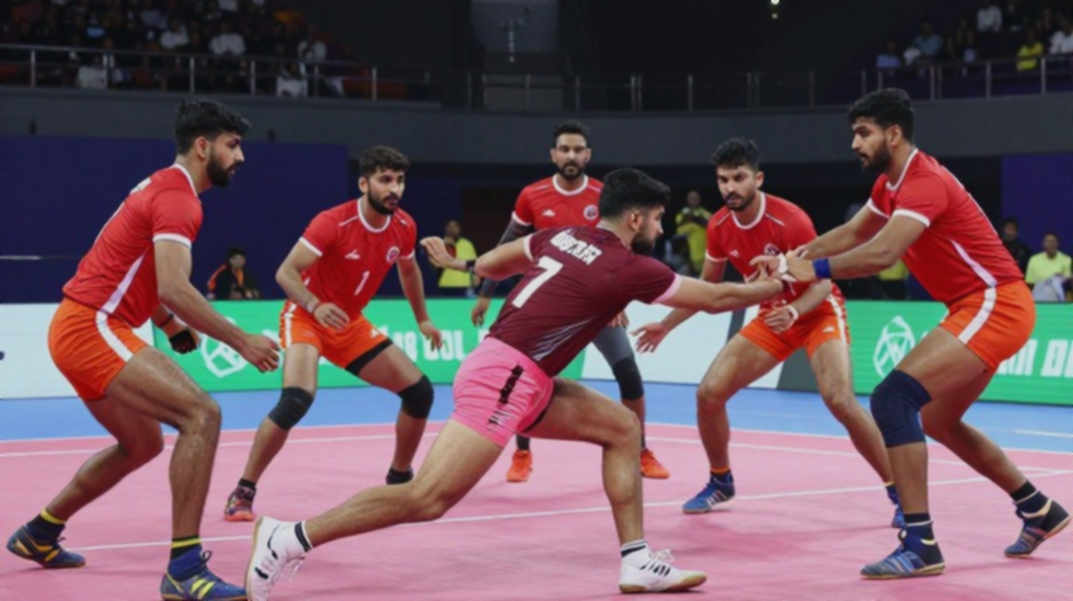
Nepal's numbers tell their own arc. Thirteen touch points in the first half against the defending champions is not a collapse; it is a credible opening twenty minutes. Five touch points in the second half is something else entirely — a fitness and depth gap, not a tactical one. Contact sport exacts its price in knees, ankles and shoulders, and the side that can sustain seven rounds of high-intensity tackling wins the back half of these matches. Nepal's second half says the fresh legs were not there.
The source also contains a data fault worth flagging. One passage gives Nepal 'only 18 points,' while the final score is 48-24, and the half-by-half breakdown sums to roughly 22 or 23. The 18 almost certainly refers to touch points alone, mislabelled as a match total. The reliable figure is 24.
Now the part that matters more than any of it. Reaching a semifinal is a genuine milestone for Nepal, and it is tempting to read it as proof that the women's field is widening. I have argued the opposite for years: when amateur sides reach the final rounds, luck of the draw and a single overperformance explain more than system does. Nepal's semifinal is a data point, not yet a trajectory; two more cycles of consistent medal-round presence would be.
And the real under-covered angle here is not the scoreline at all. India's women have no professional league. The men's Pro Kabaddi League — franchises, auctions, prime-time broadcast — is the engine that made kabaddi a business. Nothing equivalent exists for women, which means an Asian Games gold does not translate into salaries, sponsorship or a deeper pipeline. Careers rest on national camps, state jobs and prize money. Structural specialisation — line-holders, stoppers, corners — firms up under the pressure of thirty league matches a year, and women's kabaddi simply does not get those matches.
The final arrives on Saturday, September 26, 2026, against the winner of Iran versus Chinese Taipei. If Iran advance, this tournament finally gets its first real competitive test and a genuine read on India's level. If Chinese Taipei advance, the gold is near-certain and tells us very little. Either way, the twenty minutes between two scoreboards remain the honest summary: Nepal were there for a while, and then they were not — and that gap is the question the final has to answer.