
The First Paid-Seat Test: What College Swimming's Leap from 493 to 1,000 Tickets Actually Shows
**মূল উত্তর** নতুন কলেজ সাঁতার লীগের প্রথম তিন ম্যাচে ৪৯৩, ৭১৪ এবং ১,০০০-এর বেশি টিকিট বিক্রির খবর এসেছে; সাধারণ প্রবেশ ২৫ ডলার, ভিআইপি ১০০ ডলার। মূল প্রবণতা হলো বিনামূল্যের কলেজ সাঁতারে প্রথমবার দর্শক টাকা দিতে রাজি হয়েছেন, তবে সব সংখ্যা লীগ-স্বপ্রতিবেদিত এবং স্বাধীন বক্স-অফিস যাচাই ছাড়া। **মূল তথ্য** - প্রথম ম্যাচে ৪৯৩ ও দ্বিতীয় ম্যাচে ৭১৪ টিকিট; ২৫ ডলার ধরে দুই ম্যাচে সাধারণ প্রবেশ থেকে আনুমানিক ৩০,১৭৫ ডলার। - তৃতীয় ম্যাচের ধারণক্ষমতা ২,০০০ আসন; ইভেন্টের আগেই ১,০০০-এর বেশি টিকিট বিক্রি, অর্থাৎ ৫০ শতাংশের বেশি। - অংশগ্রহণকারী প্রতিষ্ঠান: স্ট্যানফোর্ড, ক্যাল, ওহাইও স্টেট, অবার্ন; চ্যাম্পিয়ন দলের প্রাইজমানি ২৫,০০০ ডলার। - ভেন্যু: স্ট্যানফোর্ড ক্যাম্পাস, জর্জিয়া, এবং চ্যাম্পিয়নশিপের জন্য ইন্ডিয়ানাপলিস। - প্রতি ম্যাচে চারটি দল; কাঠামো নিয়মিত মৌসুম, অস্পষ্ট ওয়াইল্ড কার্ড ম্যাচ ও চ্যাম্পিয়নশিপ। **সূত্র উল্লেখ** মূল সূত্র: নাম-পরিচয়হীন প্রতিবেদন; প্রকাশক সংস্থা ও প্রকাশের তারিখ উল্লেখ নেই। টিকিট সংখ্যা লীগের নিজস্ব রিপোর্ট ও ইনস্টাগ্রাম প্রচার থেকে নেওয়া; স্বাধীন বক্স-অফিস বা ভেন্যু রেকর্ড দিয়ে যাচাই করা হয়নি। **সম্পর্কিত প্রশ্নোত্তর** প্রশ্ন: কলেজ সাঁতারে দর্শক সত্যিই টিকিট কিনছেন? উত্তর: প্রথম তিন ম্যাচের স্বপ্রতিবেদিত হিসাবে হ্যাঁ, তবে স্বাধীন বক্স-অফিস যাচাই ছাড়া এই সংখ্যাগুলো চূড়ান্ত প্রমাণ নয়। প্রশ্ন: ৪৯৩ থেকে ৭১৪ — এটি কি বাড়ন্ত চাহিদার প্রবণতা? উত্তর: দুই ম্যাচের ছোট নমুনায় ৪৪.৮ শতাংশ বৃদ্ধি প্রবণতা নয়, কারণ দল, দিন, প্রতিপক্ষ ও প্রচারচক্র প্রতিবার বদলে গেছে। প্রশ্ন: এই লীগের ফলাফল International সাঁতারের মাপকাঠিতে মেলানো যাবে? উত্তর: এখনই নয় — পুলের ধরন ৫০ মিটার, ২৫ মিটার নাকি ২৫ গজ, তা প্রতিবেদনে স্পষ্ট নয়, তাই সময়ভিত্তিক তুলনা অনির্ভরযোগ্য।
The first match at the Stanford campus pool sold 493 tickets. The next day's meet sold 714. The following week the league's promotion said more than 1,000 tickets had gone, against a listed venue capacity of 2,000. General admission was priced at $25; on-deck VIP seating at $100 a seat.
For swimming, those numbers are strange. Eleven years of watching and commentating this sport have taught me that a swimming crowd usually means an almost empty gallery — the empty stadium taught me the difference between noise and signal, and swimming has always been that lesson's hardest chapter. In December 2026 at the outdoor 50m complex in Mirpur I swam the 50m freestyle in 26.4 seconds and missed the final by 0.3. Instead of packing up I called two sessions off a printed heat sheet on Facebook Live for roughly 400 viewers, and went home with a spiral notebook listing every lane, seed time and split I could verify. I kept the lane logbook long after the stopwatch stopped mattering.

So 493 and 714 are not match reports to me. They are the first results of a market experiment, and market results require an equal amount of suspicion.
The context these numbers sit inside
In US college swimming the dual meet has historically been a free event. The people in the stands are students, parents, alumni and local club coaches. Nobody buys a ticket at the door. That habit is so fixed that 'attendance' in college swimming has become almost synonymous with a full gallery of families — the crowd is a relationship, not a customer.
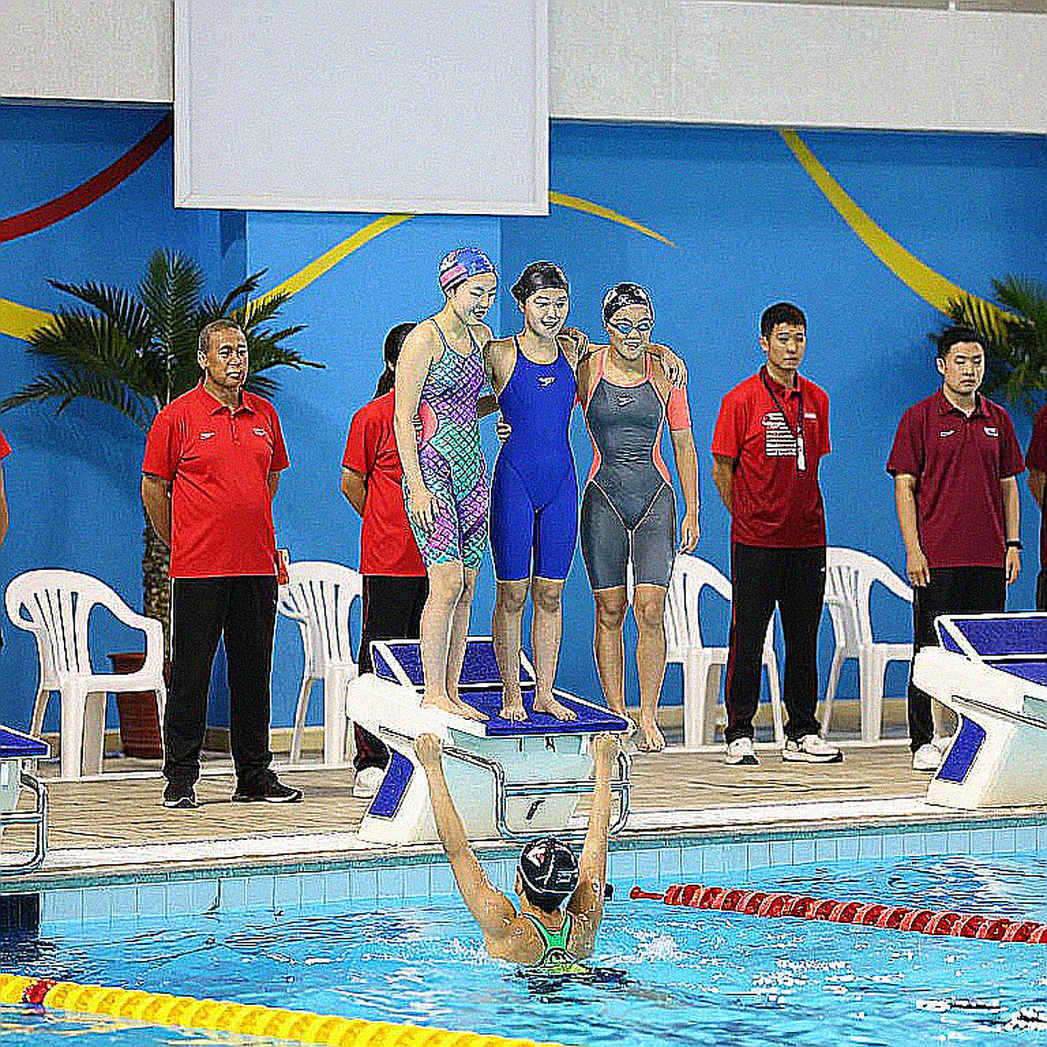
The league now positioning itself as a new college swimming property wants to break exactly that habit. The structure is a regular season, then a wild-card match, then a championship. Four teams compete in each match. The championship team's programme receives a $25,000 prize. Matches have been held at the Stanford campus pool and in Georgia, and Indianapolis — itself an established US swimming-event hub — is named as the championship venue.
The programmes involved — Stanford, Cal, Ohio State, Auburn — are perennial NCAA powerhouses. When those four names share a promotional poster, the curiosity they generate is a brand curiosity, not a swimming curiosity.
One uncomfortable caveat belongs at the top. The source report carries no named outlet and no publication date. Every ticket figure comes from league-provided reporting and Instagram promotion. There is no independent box-office record and no audited venue count. What I am analysing is therefore self-reported sales, not verified sales. I trust patterns, not press conferences, and at this moment I have only two complete matches and one partial pre-sale to work with. The wild card, how teams qualify for it, and how regular-season results feed the championship are all left unexplained.
Where the money comes from, and what is actually being sold
The product this league is selling is not swimming. It is proximity.
The arithmetic is simple. Match one: 493 tickets at $25 is $12,325, assuming all are general admission. Match two: 714 at $25 is $17,850. Together, general admission alone is roughly $30,175. Match three has moved more than 1,000 tickets before the event, which is more than $25,000 in general admission alone, plus VIP suites whose sales are never stated. If each team has one 19-seat on-deck suite, four suites would add $7,600 — but the number of suites is not given, so that is a scenario, not a figure.
Those are not large numbers. The important part is that in swimming, people agreed to pay at all, in a sport where club, college and university meets are normally free to watch. More than 1,000 pre-sold tickets against a 2,000-seat venue means the match is at least 50% sold before it begins. For a new property that is an encouraging signal — if the numbers hold.
Match two outsold match one by 44.8%. As a commentator the temptation is to shout 'the graph is up'. Sixty-four matches taught me that a template is just a story that survived repetition, and two matches are never a template. Different teams, different days, different promotion cycles, different opponents — not one of those variables was held constant. The 44.8% is an estimate, not a trend.
One more detail is worth noticing. Each match features four teams, and the seating layout is built around each team's own sightline. The ticket-buyer is not only coming to watch swimming; he is coming to sit beside his own team. That layout sits awkwardly with traditional swimming galleries and much closer to American football or basketball crowd culture.
From that follows the next conclusion. The engine behind ticket sales is not a swimmer — it is a brand. Stanford, Cal, Ohio State and Auburn pull the crowd by themselves. The split time reveals the runner; the final score reveals the system, and here the score comes from school names, not from anyone's personal best.
Where my normal reading flips
In swimming I have long assumed the problem is infrastructure. No pools, no coaches, no pipeline, no seats for spectators. Six weeks in the haor villages of Sunamganj in 2026, documenting how roughly 40 children drown in Bangladesh every day, hardened that assumption. My piece tracing four decades of Bangladeshi Olympic invitations showed that not one universality entry had ever met a merit standard. The equation I carried away was simple: build the facility and the sport grows.
College swimming's experiment suggests the opposite. Stanford and Cal have had the pools, the coaches, the tradition and the alumni networks for generations. What is new is seats and pricing. Even with the facility in place, a commercial question survives intact: will anyone buy?
Three blind spots hide inside this story.
The first is measurement. The league is not tracking what it most needs — audited attendance. 'Selling fast' and 'nearly gone' are urgency signals, not demand evidence. Novelty carries a new property through its first few weeks; the real question arrives in week nine or ten, when the novelty has gone and the gallery holds only parents and coaches. Until the counter is independently checked, this enthusiasm is a signal, not proof.
The second is subtler. The report never states the pool type — 50m long course, 25m short course, or the 25-yard pool standard in American colleges. If the venues are campus pools, 25 yards cannot be ruled out. That is not idle curiosity. If times emerge from this league later, they cannot be mapped directly onto international 50m standards. Short-course times dropped into a long-course record book produce false arithmetic, and false arithmetic misleads the audience.
The third is structural. When four legacy programmes enter the same league, they capture most of the upside. The brand brings the crowd, the brand sells the ticket, and the brand's reach narrows the door for smaller programmes outside the circle. The prize number points the same way: $25,000 per school at the championship is close to the likely gate revenue of three matches combined. Tickets are not the league's real engine; the engine sits outside the venue, in sponsorship or investment, and the report is silent on it.
Looking forward
For the first time in swimming, people are paying for a seat. That is the biggest story here, and the least verified one. The tension between those two sentences is what will make next season worth watching.
Swimming is a sport that always had spectators but never customers. The experiment to convert one into the other has begun, and the question is no longer attendance alone — it is whether the same spectator returns for a second, fourth, eighth time. A culture is what remains when the highlight reel is deleted, and what remains here will be either a gate count or empty rows.
My own notebook still records every lane, seed time and split, because the ledger keeps working long after the stopwatch stops. This league stands in exactly that position: it can sell celebrity tickets, but without an audited file from the ticket counter it will never know whether its crowd is a one-time neighbour or a permanent member.