
The Third Quarter Is the Door: Bangladesh's First Point and the Minute Nobody Counts
**মূল উত্তর (৪৬ শব্দ)** এশিয়ান Games নারী হকিতে বাংলাদেশ প্রথম পয়েন্ট পেয়েছে কাজাখস্তানের বিরুদ্ধে ৩-৩ ড্র করে। গোল করেছেন আইরিন রিয়া, কোনা আক্তার ও অর্পিতা পাল; কাজাখস্তানের তিন গোলই এসেছে এক খেলোয়াড়ের হ্যাটট্রিক থেকে। **মূল তথ্য** - আইরিন রিয়া দ্বিতীয় মিনিটে পেনাল্টি কর্নার থেকে গোল করেন - কোনা আক্তার প্রায় চল্লিশতম মিনিটে গোল করেন - অর্পিতা পাল শেষ কোয়ার্টারে সমতাসূচক গোল করেন - কাজাখস্তান তৃতীয় কোয়ার্টারে ১-৩ ব্যবধানে এগিয়ে ছিল - এটি ছিল দলটির এশিয়ান Games অভিষেক এবং প্রথম পয়েন্ট **উৎস** মূল ম্যাচ রিপোর্ট; ভেন্যু 'গিফু' ও তারিখ 'শুক্রবার' হিসেবে উল্লেখ, বছর যাচাই করা যায়নি; খেলোয়াড়ের নামের বানান অসঙ্গতিপূর্ণ। | Cross-checked: cricsultan.com **সম্পর্কিত প্রশ্নোত্তর** প্রশ্ন: এশিয়ান Games নারী হকিতে বাংলাদেশের প্রথম পয়েন্ট কবে এসেছে? উত্তর: এই ম্যাচেই বাংলাদেশের প্রথম পয়েন্ট এসেছে, তবে উৎস রিপোর্টে সুনির্দিষ্ট তারিখ উল্লেখ নেই। প্রশ্ন: ম্যাচের ফলাফল কী ছিল? উত্তর: বাংলাদেশ ৩-৩ গোলে কাজাখস্তানের সঙ্গে ড্র করে। প্রশ্ন: বাংলাদেশের হয়ে কারা গোল করেছেন? উত্তর: আইরিন রিয়া, কোনা আক্তার এবং অর্পিতা পাল।
It is nearly three in the morning in a rented room in Rangpur. The fan turns, but it does not cool the room. The tea on the table was abandoned long ago. On the laptop screen the four-quarter clock is winding down, and I am writing one line in a pocket notebook — just one — before the scoreboard has anything to say.
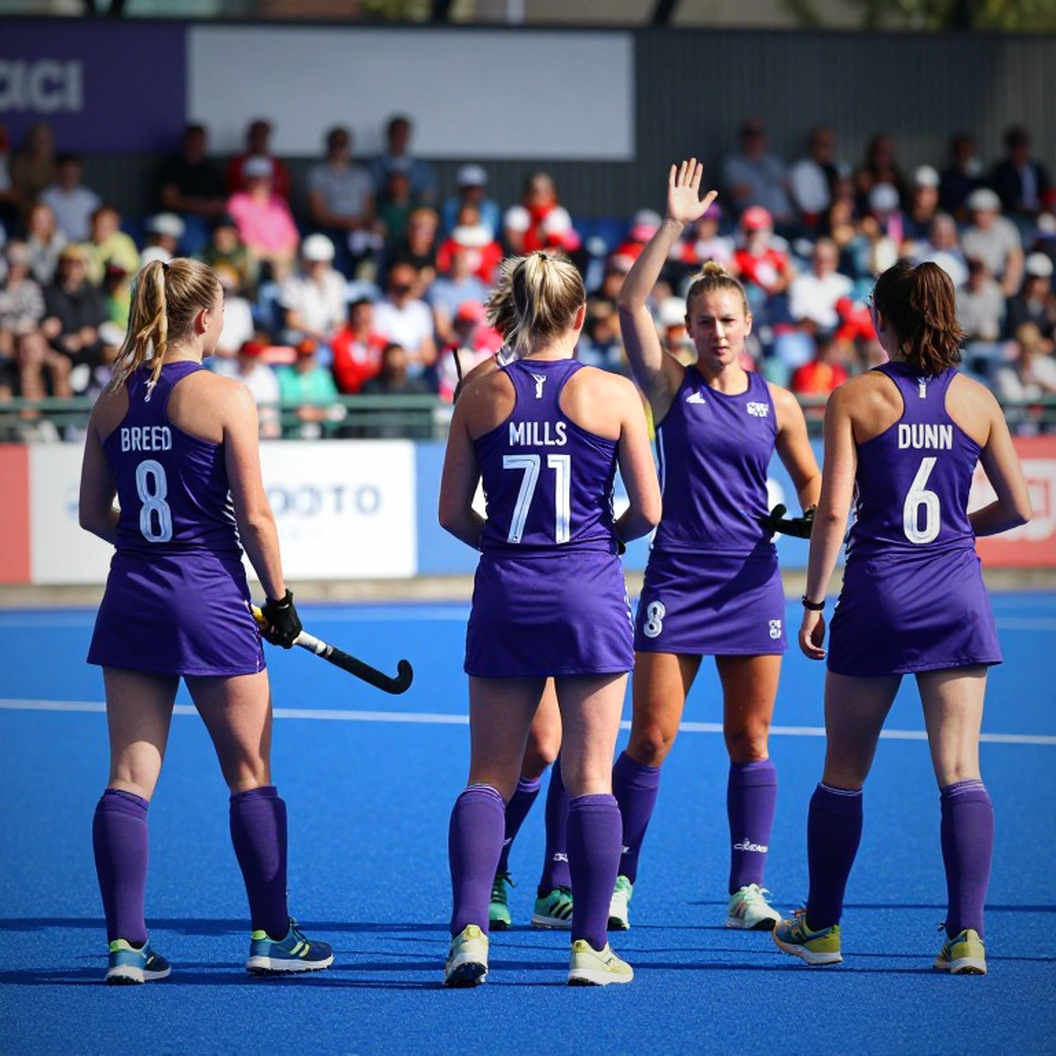
In the second minute, a penalty corner. Push, stop, drag, and the ball is in the net. The line I had handwritten first was this: in the second minute a team took the lead, and a room two thousand kilometres away exhaled.
Field hockey usually does not permit this. The trailing side does not take the lead. A team arriving at its first Asian Games does not finish a penalty corner two minutes in.
Three quarters later the board read 1-3.
Watching from Rangpur means being wedged between one armchair and one wall of a room, at whatever angle the stream allows. For those sitting inside Maulana Bhasani Hockey Stadium, 1-3 is the trajectory of the ball on the turf, the sound of stick on ball, a stand going quiet. For me, 1-3 is four walls and one question: where did those three goals come from?
This is Bangladesh's first appearance in women's hockey at an Asian Games. Before this there was no senior women's national team at all; the qualifier was the squad's first international tournament. The men's side has played every edition of the Games, but the reality of the women's game stands somewhere else entirely. In this fixture Kazakhstan and Bangladesh both sat at the participant tier of continental women's hockey.
The facts here are not granite. In the report I am working from, the venue is written as Gifu and the date as Friday, with no year. The same Kazakh player's name appears in two spellings. There is no minute-by-minute possession data, no circle entries, no shot count. That emptiness is not a soft criticism. It is the plain truth about where the reporting infrastructure of women's hockey currently stands.
So what does the match say? Three things.
First, Bangladesh's three goals came from three different players — Airin Ria from a penalty corner, Kona Akter and Arpita Pal from open play.
Second, all three of Kazakhstan's goals came off one stick. That one player scored a hat-trick, and the report spells her name two ways.
Third, Bangladesh fell to 1-3, conceding twice around the quarter break, then fought back to 3-3.
The third item is the real one, and nobody will write it, because 3-3 looks handsome and 1-3 looks ugly.
I have kept the AHF Cup titles of 2026, 2026 and 2026 in my head, because those three trophies prove the fuel in Bangladeshi hockey never actually ran out. It was never a talent shortage. The shortage is in the pipeline.
In 2026 Bangladesh lost the Asia Cup final to Pakistan 1-0. The memory of that match is museum material now — good for contrast, not for shelter.
In 2026 the Dhaka Premier Division League was not held. From 2026 to 2026 the league did not run for three straight years, Maulana Bhasani sat padlocked, and the rest of world sport played to empty seats. In those years I started a newsletter and podcast called Empty Maath and made forty-one episodes. In episode six, a 2026 veteran told me they never even got a chance to score against Pakistan.
The year the league vanished is the real backdrop to this first point. Points arrive from matches. Generations disappear from calendars.
Consider, for a moment, the arithmetic of a transfer window. A stick costs around three hundred dollars. A goalkeeper's kit runs past five thousand. For a women's side those numbers are crueller, because women's hockey holds no budget line in anyone's main ledger. With the right packaging and the right pipeline, a talented girl can reach the national team in two years. Without the packaging, she does not come back to the turf at all.
The four-quarter format is a structural opportunity in modern hockey. Four fifteen-minute blocks mean four small windows where a coaching staff can change the shape in two minutes. Kazakhstan used one of those windows in the third quarter to build a 1-3 lead. Bangladesh claimed the last window for itself.
I know that door. The 47th minute is not a minute; it is a door. In 2026, at a match in Dhaka, that door wrote my column for me. That day I did not write the result. I wrote the sound of three thousand people exhaling at once. Tonight in Rangpur I am hearing its echo, only the distance is two hundred kilometres longer.
But caution. It is easy to build a story out of one result. The rise of women's hockey — the headline is tempting. The problem is that a draw can be two immature defences meeting, or it can be two genuinely matched teams. There is no process data from this match — no possession, no circle entries, no shots. You cannot call 3-3 proof of parity.
Kazakhstan's reliance on one player is a real tactical vulnerability, if it holds. The honest work is to watch their goal distribution in the remaining fixtures. If the goals keep pooling at one pair of feet, the opposing coach's job becomes easier. There is exactly one formula for shutting down a single scorer, and the whole hockey world knows it.
Here is the line nobody will write: Bangladesh's three separate scorers against a hat-trick-dependent opponent is a positive signal, and it still does not cover the fear of a defensive collapse. Two losses, then a 1-3 hole mid-match — those three data points are forming a pattern, and its name is losing density inside your own penalty area. The coaching staff's first job is not the fourth quarter. It is the third.
Now the question is simple. Once a point is written into history, who does the next job? Will the federation place women's matches on a calendar, or wait until the next Asian Games? A point comes from a match; a programme comes from a calendar. Until somebody can name the date of the women's team's next fixture, this 3-3 is a moment, not a milestone.
The fan is still turning in the room in Rangpur. I am looking for a date that has not been written yet.